Small study
Where the name came from
It started with a kitchen.If what you mostly make is salad, you do not need a range hood or a gas stove. Everyone's kitchen holds only what their own dishes need.
The AI does the prep.Washing and chopping go to the AI. You keep the part you love: which frame a sound lands on, how heavy it hits.
Made for people you care about.And in the end you cook it yourself, for the people you love.
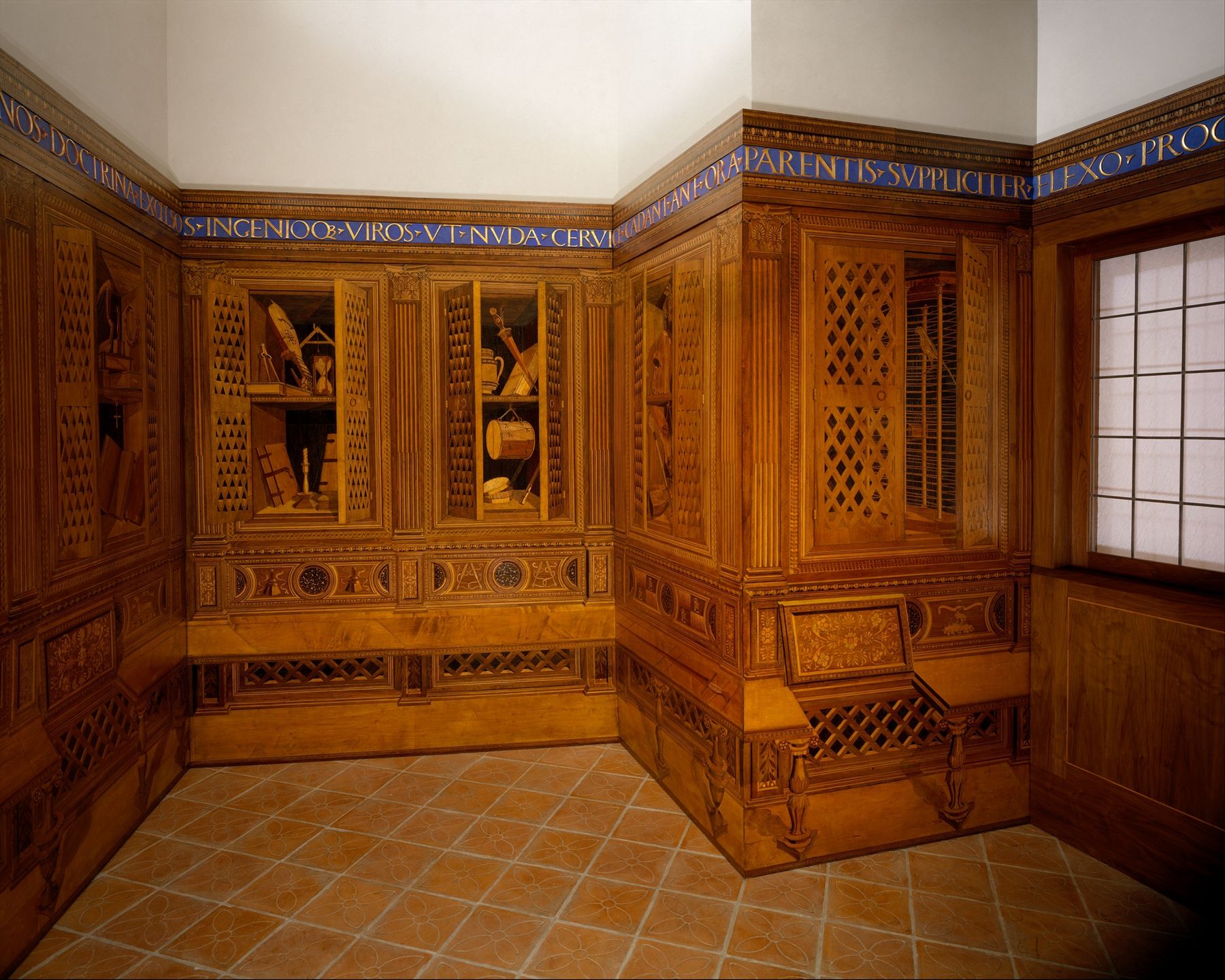
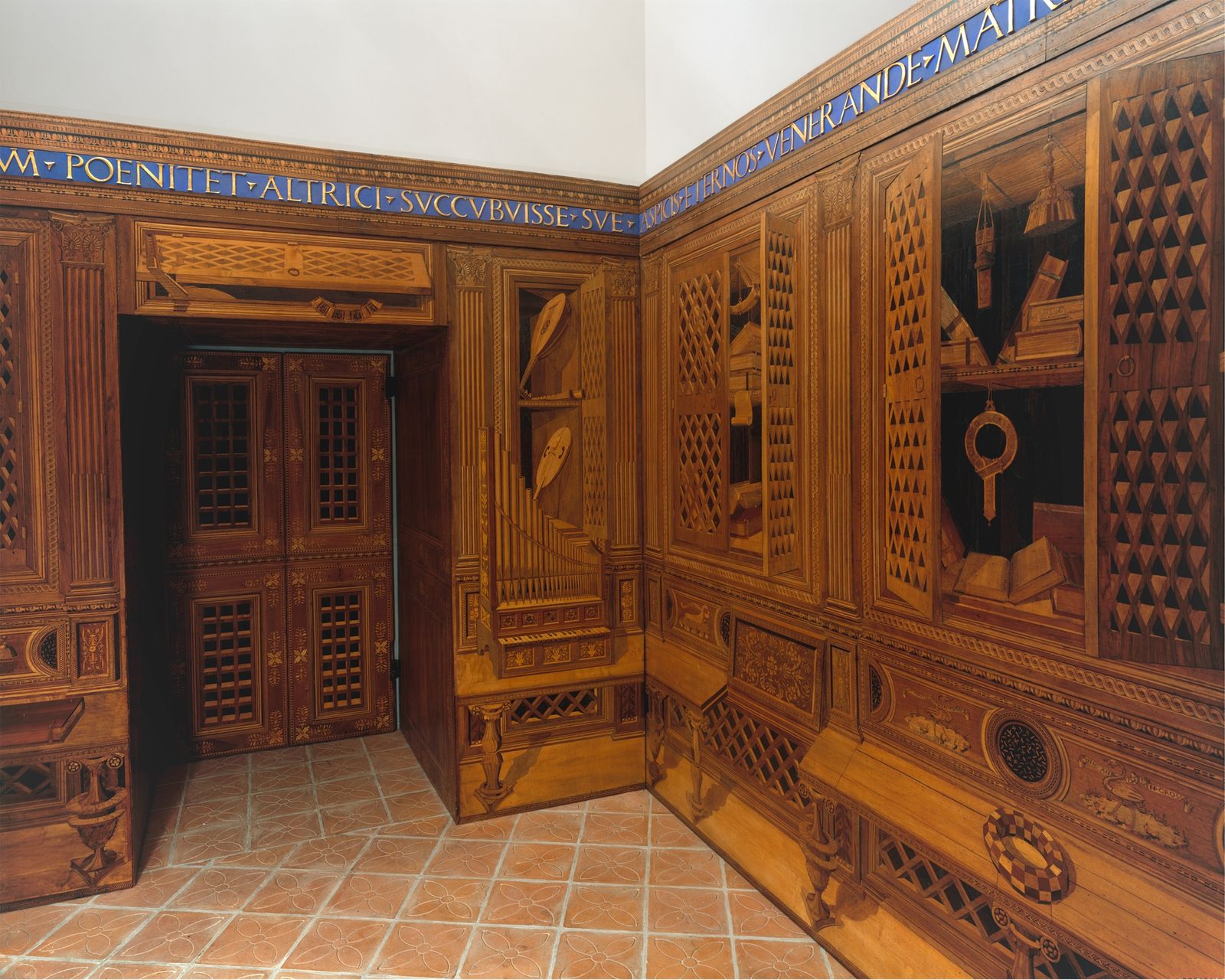
The name stands on the side of sound.Call it a kitchen and sound people cannot connect it. The first half of Studiolo is studio, which every sound person reads at once; the whole word is that small room from five hundred years ago, kept for one person's things. The kitchen stays in this story.
The chores are handled outside the door. Inside, you make the sound.
Rests
From 1502, Isabella d'Este of Mantua used a piece of music made only of rests as her personal emblem, set into the ceiling of the small room beside her study. A rest is where nothing sounds. Leaving out what you do not need is what Studiolo is about too.
What this study is for next
Pictures and type
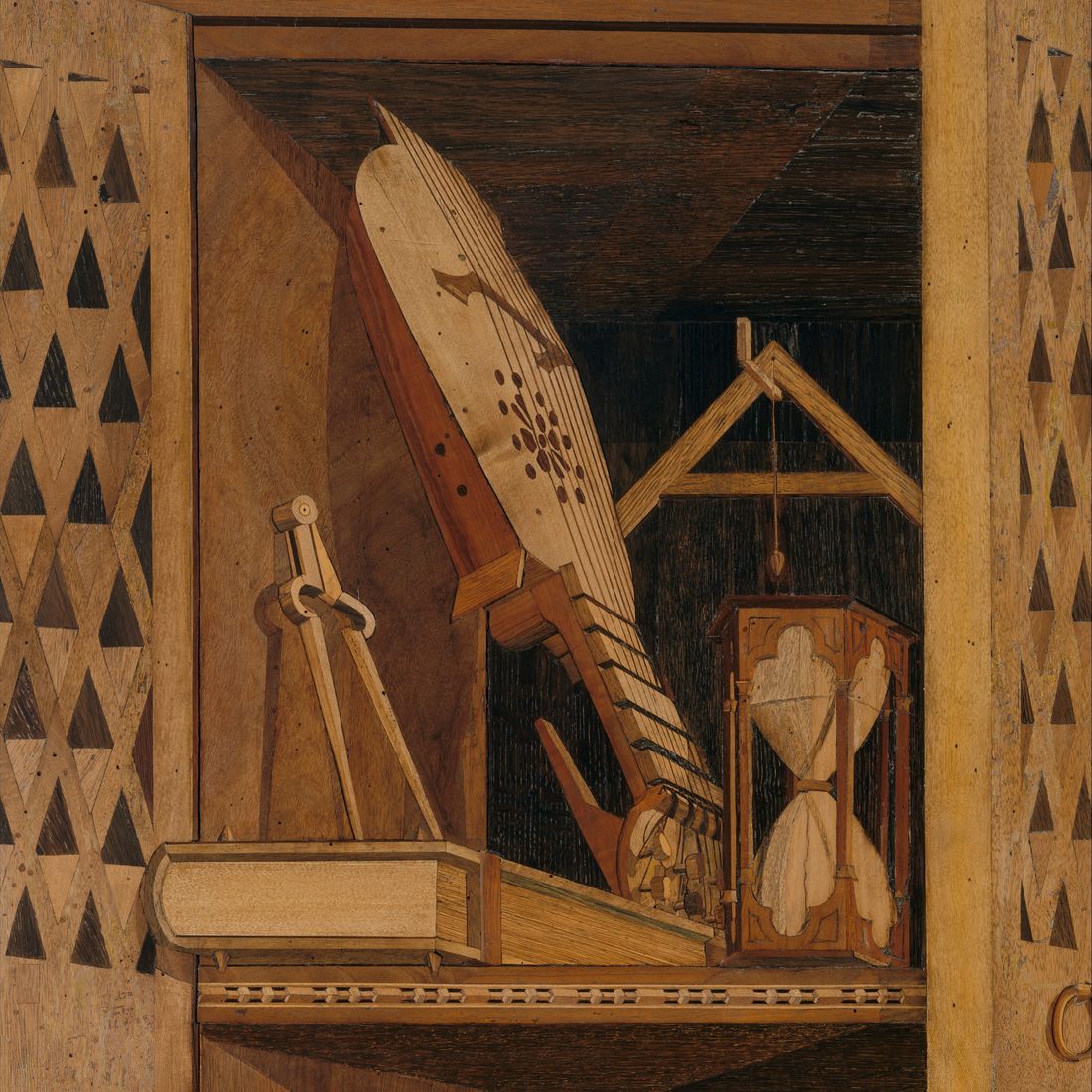
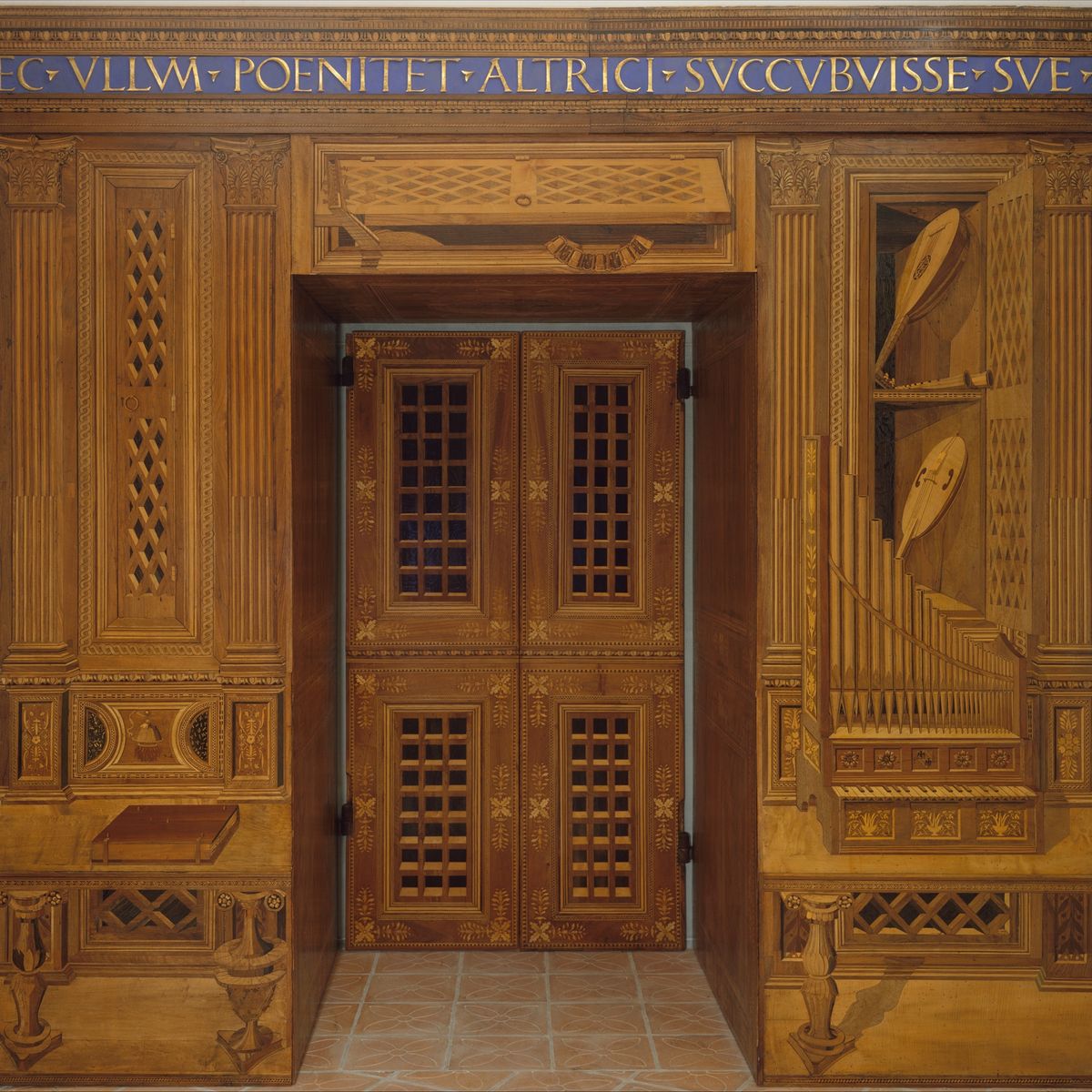
Studiolo from the Ducal Palace in Gubbio, about 1478–82. Designed by Francesco di Giorgio Martini, executed in the workshop of Giuliano da Maiano. The Metropolitan Museum of Art, New York, 39.153 (Rogers Fund, 1939). Photographs: The Met Open Access (CC0, public domain). See the museum's collection page
Studiolo screens: a test project in beta 1.1.62, with no client work in it.
Type: Unbounded and Onest, both under the SIL Open Font License 1.1.
Not a bigger studio.
Your own studiolo.
Early access opens December 31, for Windows. Want to know first? Drop us a line.
Tell me when it opens